
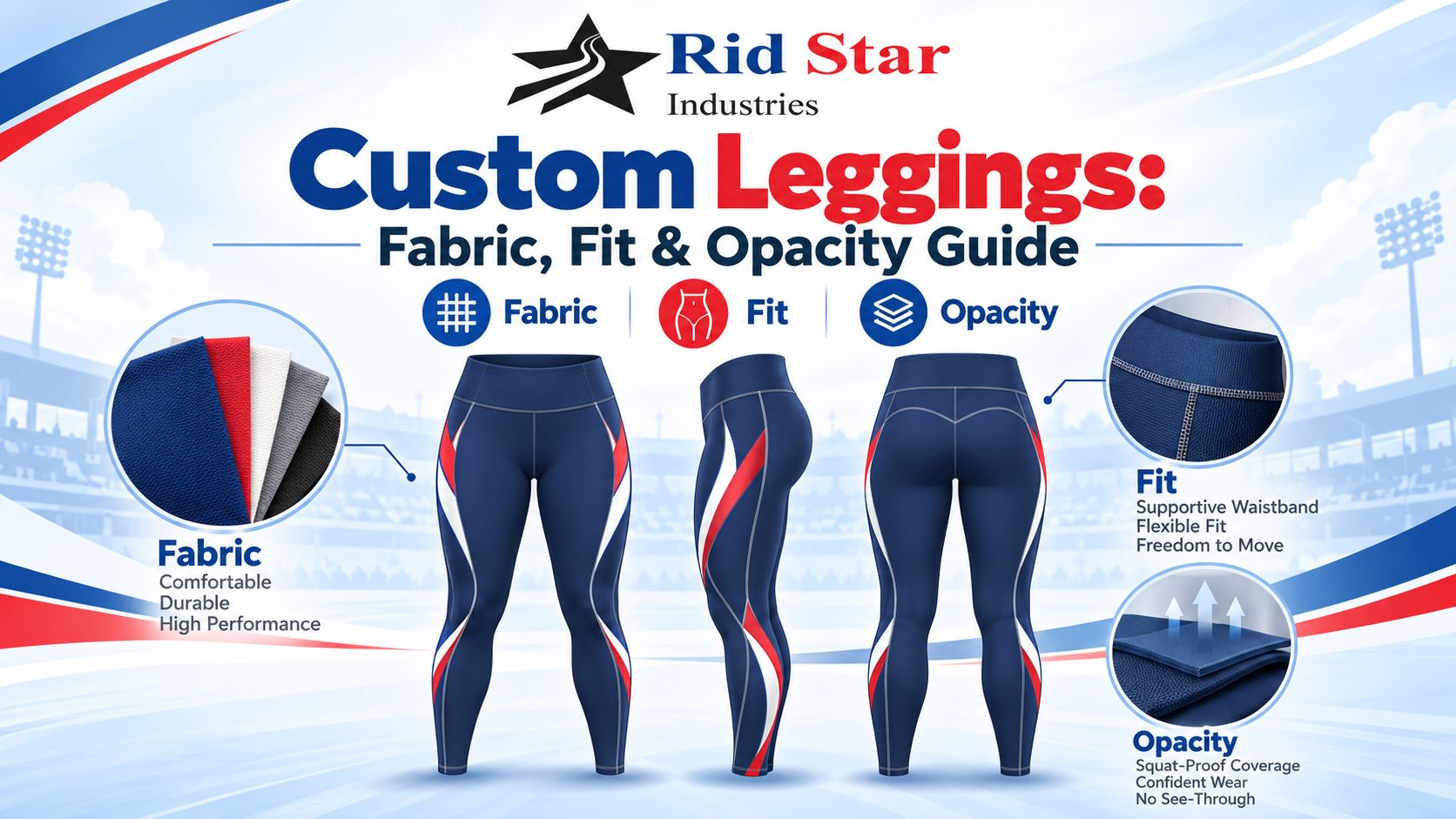
Custom Leggings: Fabric, Fit and Opacity Checks for Brands
When ordering custom leggings, a design sketch and a size label leave important manufacturing decisions unresolved. Buyers also need to define how the garment should fit, how much coverage it should provide during movement and how the waistband, seams and pockets should function.
For activewear brands and private-label buyers, the aim is to turn those expectations into specifications that a manufacturer can sample and reproduce. This guide focuses on the leggings themselves: fabric, fit, coverage and construction.
Define the Intended Activity and Fit
Explain who will wear the leggings and what they will use them for. A yoga collection, running range and everyday leisure collection may have different priorities for feel, support, pockets and movement.
Specify the intended waist height, leg length and overall fit. Rather than relying on terms such as “sculpting” or “second skin,” provide a reference garment or describe the fit you want the sample to demonstrate.
Identify essential features separately from optional ones. These might include side pockets, a waistband pocket, particular panel lines or a preferred front-seam arrangement. Ask the manufacturer to assess the proposed construction before treating every feature as confirmed.
For the wider collection brief, our custom activewear manufacturing guide explains how to organise styles, quantities and branding requirements.
Specify the Fabric Beyond Its Name or GSM
Ask for the fibre composition, knit construction, fabric weight and reference code of the proposed material. Keep an approved swatch alongside the written specification.
Descriptions such as “stretch fabric” or “high GSM” are not complete specifications. Review the actual material for its surface feel, stretch in both directions and appearance when extended.
Discuss stretch recovery separately from stretch itself: after the material extends, how well does it return towards its original dimensions? Ask what evidence or agreed testing will support the performance your product requires.
Do not automatically apply a sports-shirt fabric specification to leggings. Select the material against the leggings’ fit, coverage and intended use, then assess it in a finished garment.
Review Opacity During Movement
Opacity describes how effectively the material prevents what is underneath from showing through. For leggings, review coverage while the garment is worn and moving, as well as while it lies flat.
Use a sample in the proposed production fabric and colour. Have an appropriate fit tester assess bending, squatting and other movements relevant to the intended activity. Check the seat, hips, thighs and areas where the garment is under tension.
Keep the review conditions consistent and record the sample size, colour, lighting and movements used. A photograph can help document an issue, but it should not be the only basis for approving coverage.
Treat “squat-proof” as a claim that needs defined evidence. Agree on what acceptable coverage means for the product and whether laboratory assessment is required. Hohenstein, for example, offers textile opacity assessment; confirm whether any proposed assessment addresses the conditions relevant to your garment.
Check the Waistband, Rise and Leg Length Together
A waistband should be assessed as part of the complete garment. Record whether it rolls, slips, digs in or needs repeated adjustment during the intended movements.
Provide clear measurements and reference points:
| Area | What to specify or review |
|---|---|
| Waistband | Finished height, circumference and construction |
| Front and back rise | Measurement method and intended waist position |
| Hip and thigh | Finished measurements and fit on the intended wearer |
| Inseam | Measured length and desired position on the leg |
| Leg opening | Circumference, comfort and position during movement |
Distinguish body measurements from garment measurements. For elasticated areas, agree whether measurements are taken relaxed or under a specified amount of stretch.
Describe problems precisely. “The back waistband drops during a squat” gives the manufacturer more useful information than “the fit is wrong.” Ask for an assessment before deciding which measurement or construction detail should change.
Assess Seams, Pockets and Branding
Inspect seams inside and outside the sample. Check for skipped stitches, openings, uneven joins and uncomfortable bulk. During movement, note any pulling or irritation around the waistband, crotch and inner legs.
If the design includes a gusset or additional panels, review their shape, placement and comfort in the finished garment.
Test pockets with the item they are intended to hold. A phone pocket should be reviewed with a representative phone during the planned activity. Record problems such as bouncing, difficult access or the pocket pulling the garment out of position.
Approve logos at their actual size and location on the proposed fabric. Check their appearance during normal stretch and after the agreed washing review. A flat artwork proof cannot confirm the finished decoration’s flexibility or feel.
Record Results Across Sizes and Colours
One approved sample does not establish that every size and colour meets the same requirements. Agree which additional samples or checks are needed for the planned range.
Keep a simple review record containing:
- Sample reference, size, colour and fabric reference.
- Specified and measured garment dimensions.
- Fit and coverage observations.
- Waistband, pocket and seam issues.
- Required corrections and approval status.
After the agreed wear and washing checks, compare measurements, shape and appearance with the original record. Keep unresolved requirements clearly marked before authorising production.
Our guide to reviewing a custom apparel sample explains how to consolidate feedback and document approval.
Discuss Custom Leggings with Rid Star Industries
Rid Star Industries manufactures custom activewear and apparel for international B2B buyers. Explore our activewear and fitness wear manufacturing service to discuss leggings, related garments and private-label requirements.
Our minimum order quantity is 10 pieces/sets. Share your proposed style, colour and size breakdown so the available combinations can be confirmed.
For a leggings enquiry, include design references, intended activity, waist height, leg length, pocket requirements, fabric preferences and branding details. If you have an existing garment with the fit or feel you want, identify which features should be retained or changed.