
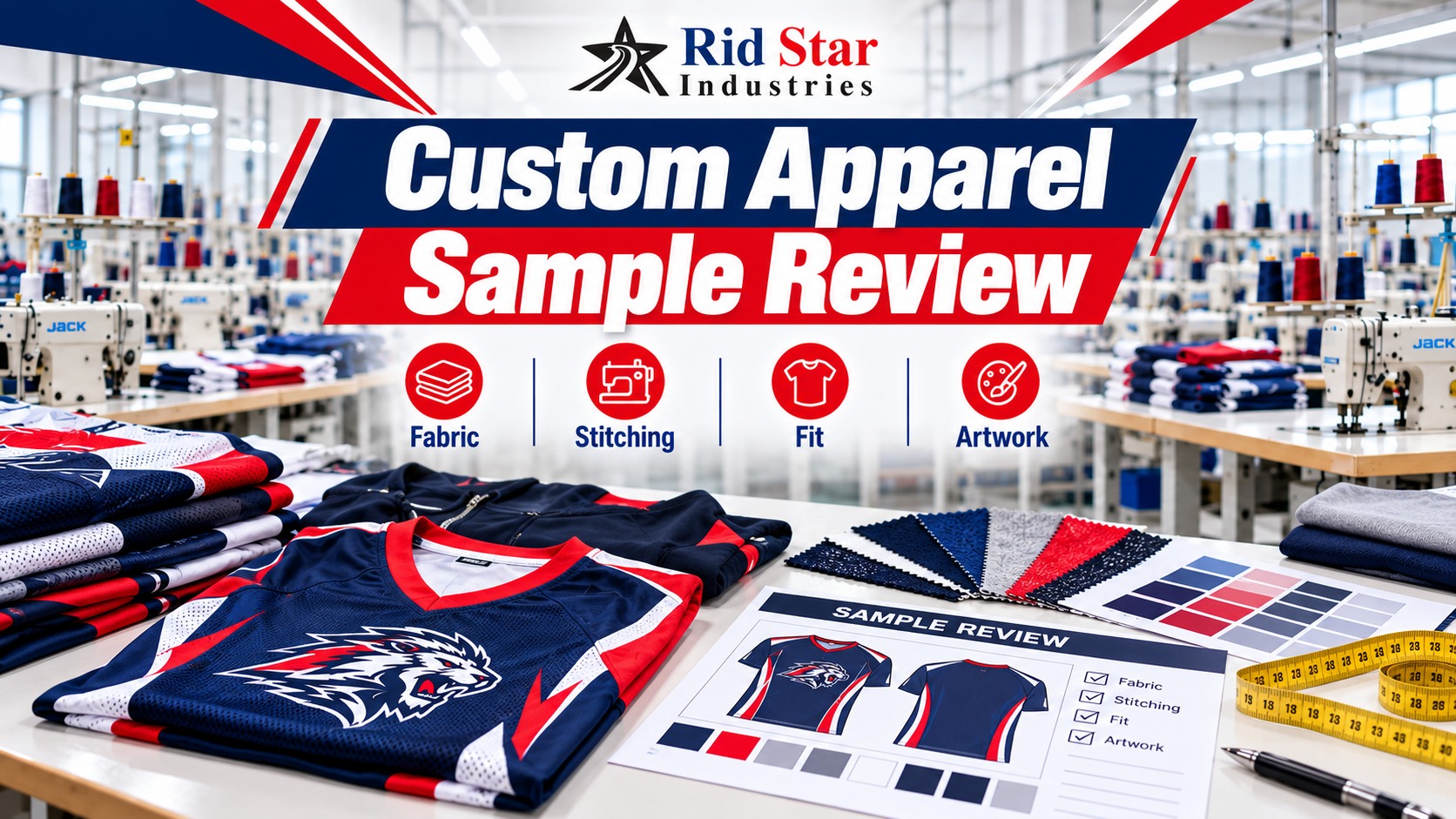
How to Review a Custom Apparel Sample Before Bulk Production
A custom apparel sample gives buyers something concrete to review before authorising bulk production. The important question is not simply whether the garment looks good, but whether it matches the requirements agreed with the manufacturer.
For sports brands, clubs, wholesalers and private-label buyers, that review should cover measurements, fit, fabric, stitching, decoration and finishing. Any differences need to be recorded clearly so the supplier knows what to correct and what has been accepted.
This guide explains how to review a custom apparel sample, organise feedback and document approval. An approved sample provides a reference for production; it does not replace quality checks on the finished bulk order.
Confirm What the Sample Is Intended to Represent
Before assessing the garment, ask the manufacturer what you are being asked to approve. Is this sample intended to demonstrate fit, test a design or represent the proposed bulk-production specification?
A sample made in a substitute fabric may help you discuss construction, but it should not be treated as approval of the final material. Similarly, a garment without the agreed labels or decoration cannot confirm those details.
Ask the supplier to identify any differences between the sample and the planned order, including:
- Fabric composition, weight, construction or colour.
- Garment measurements and size.
- Printing, embroidery or artwork placement.
- Zips, elastic, drawcords and other trims.
- Labels, packaging and finishing.
Keep the current specification sheet, artwork version and measurement chart alongside the sample during your review. Give the sample a reference number or date so your feedback clearly identifies the garment being discussed.
If anything is provisional, record it as pending. State which details you accept and which require correction or a further sample before production approval.
For activewear orders, use our custom activewear manufacturing guide to organize your product specifications, sizing and branding requirements before sampling.
Check Measurements and Fit Against the Agreed Specification
Use the measurement chart agreed for this particular style and sample size. A size label such as “Medium” is not enough to confirm whether the garment meets your requirements.
Measure the garment using the same method as the supplier. Confirm the measurement points, whether dimensions are taken flat, and whether elasticated areas should be measured relaxed or stretched. Different methods can produce different results.
Record the specified measurement, the sample measurement and any difference. Compare that difference with the tolerance agreed for each measurement point; do not introduce a new tolerance after the sample arrives.
For example, if a specification gives a flat chest width of 52 cm and the sample measures 53 cm, record the 1 cm difference. Whether it is acceptable depends on the agreed tolerance and the intended fit.
Then assess the garment on someone whose body measurements match the intended size. Check the movements relevant to its use, such as reaching, bending or squatting. Note pulling at seams, restricted movement, uncomfortable openings or unwanted exposure.
Keep measurement corrections separate from design changes. “Chest width is outside the agreed tolerance” and “we would prefer a looser fit” require different responses from the manufacturer.
Approval of one sample size does not confirm the fit of every size in the order. Discuss whether additional sizes need to be sampled, particularly when the range includes both youth and adult garments.
Review Fabric, Stitching and Garment Construction
Compare the sample with the agreed fabric specification and any approved swatch. Review its surface, feel, colour and suitability for the intended garment. For stretch apparel, also assess coverage and comfort during movement.
Do not rely on touch alone to verify fabric composition or GSM. Ask for supporting material information and agree on any testing needed for requirements that cannot be confirmed through a visual review.
Inspect the garment both outside and inside. Pay particular attention to:
- Open seams, skipped stitches and loose thread ends.
- Puckering or uneven seams.
- Uneven hems, cuffs, collars or waistbands.
- Bulky joins or rough finishing against the skin.
- Attachment of pockets, zips, elastic and drawcords.
- Reinforcement at the stress points specified for the design.
Operate zips and other fastenings several times and check that they work smoothly. Look at matching parts together, such as sleeves or pockets, to identify unintended differences in shape or placement.
Photograph each issue with its location clearly marked. Replace vague feedback such as “improve stitching” with a specific observation, for example: “The left side seam has an opening below the armhole; please correct this and provide evidence of the repair.”
If a correction changes the construction or fit, agree whether a revised physical sample is needed before approval.
If your material specification is still being developed, our guide to choosing the right fabric for sports uniforms explains the factors to discuss before requesting a sample.
Check Decoration, Labels and Packaging Details
positions from agreed reference points, rather than judging them only by eye.
Review colours against the agreed physical reference where available. Use photographs to identify issues, but avoid making final colour decisions from a phone or computer screen alone.
Inspect decoration closely for blurred edges, missing details, unwanted marks or distortion. For embroidery, check lettering legibility, puckering around the design and the feel of the backing against the skin. For printed areas, assess the finish and comfort when the garment is worn.
A sample with one name and number does not verify every personalised item in the order. Check the complete production artwork and roster separately.
For private-label orders, review the actual labels and their placement. Confirm that brand names, size markings, care information and other agreed wording match the approved files. Record missing or provisional labels as outstanding items.
If packaging is included in the sample review, check folding, bags, stickers and any individual identification required for distribution. If it has not been supplied, request a separate packaging sample or proof before approving that part of the order.
Agree on Wash and Performance Checks Before Approval
Discuss how the sample should be washed and dried, and agree on the checks needed for its intended use. Keep a record of the garment’s measurements and appearance before washing so you have a clear basis for comparison afterwards.
For a practical wash review, follow the proposed care instructions and record the washing and drying conditions. Check for changes in dimensions, shape, seams, decoration and overall appearance.
Use the same measurement method before and after washing. Photograph any visible changes and report the conditions used, rather than sending feedback such as “the fabric changed” without supporting details.
One wash does not establish long-term durability. A basic wear or wash review also does not substantiate claims such as moisture management, abrasion resistance or colourfastness. Where these properties matter to the buyer’s specification, agree on suitable testing, acceptance criteria and who will arrange it.
If washing or testing will alter the sample, discuss whether an additional sample is needed. Keep an agreed reference garment available for comparison during production.
Document Corrections and Give Clear Written Approval
Collect feedback from everyone involved in the decision before sending it to the manufacturer. One consolidated review helps avoid conflicting instructions from purchasing, design and team management.
For each correction, record the sample reference, the issue, the required change and how you expect the correction to be verified. Include marked photographs and measurements where useful.
State clearly whether the sample is approved, requires revision or has only specific details approved. If you accept the fit but are still reviewing the print, say so explicitly and confirm that bulk production is not yet authorised.
Before giving final approval, check that your written record identifies:
- The approved sample and its date or reference.
- The final garment specification and measurement chart.
- The approved artwork, colours, labels and packaging.
- Any corrections and evidence that they have been completed.
- The person authorised to approve production.
Ask the manufacturer to acknowledge the same versions. Keep an approved reference sample and agree how the factory will retain an equivalent reference for production checks.
If a material, trim or design detail changes after approval, review the effect before accepting the substitution. Confirm any resulting changes to price or delivery timing in writing.
Sample approval is one stage of the order. Agree separately on checks during production and before shipment so the bulk garments can be assessed against the approved requirements.
Discuss Your Custom Apparel Requirements with Rid Star
Rid Star Industries manufactures custom sports uniforms, activewear, casual apparel and fitness wear for B2B buyers. Our minimum order quantity is 10 pieces/sets; share your style, colour and size breakdown so the available combinations can be confirmed.
When discussing a sample, provide your garment specification, measurement chart, artwork, branding requirements and planned order quantity. Explain which details you need the sample to demonstrate, and confirm sample costs, timing and revision arrangements before proceeding.
Use our quote builder to submit your product requirements and artwork. Include any sample-review requirements in your enquiry so they can be discussed alongside the proposed bulk order.