
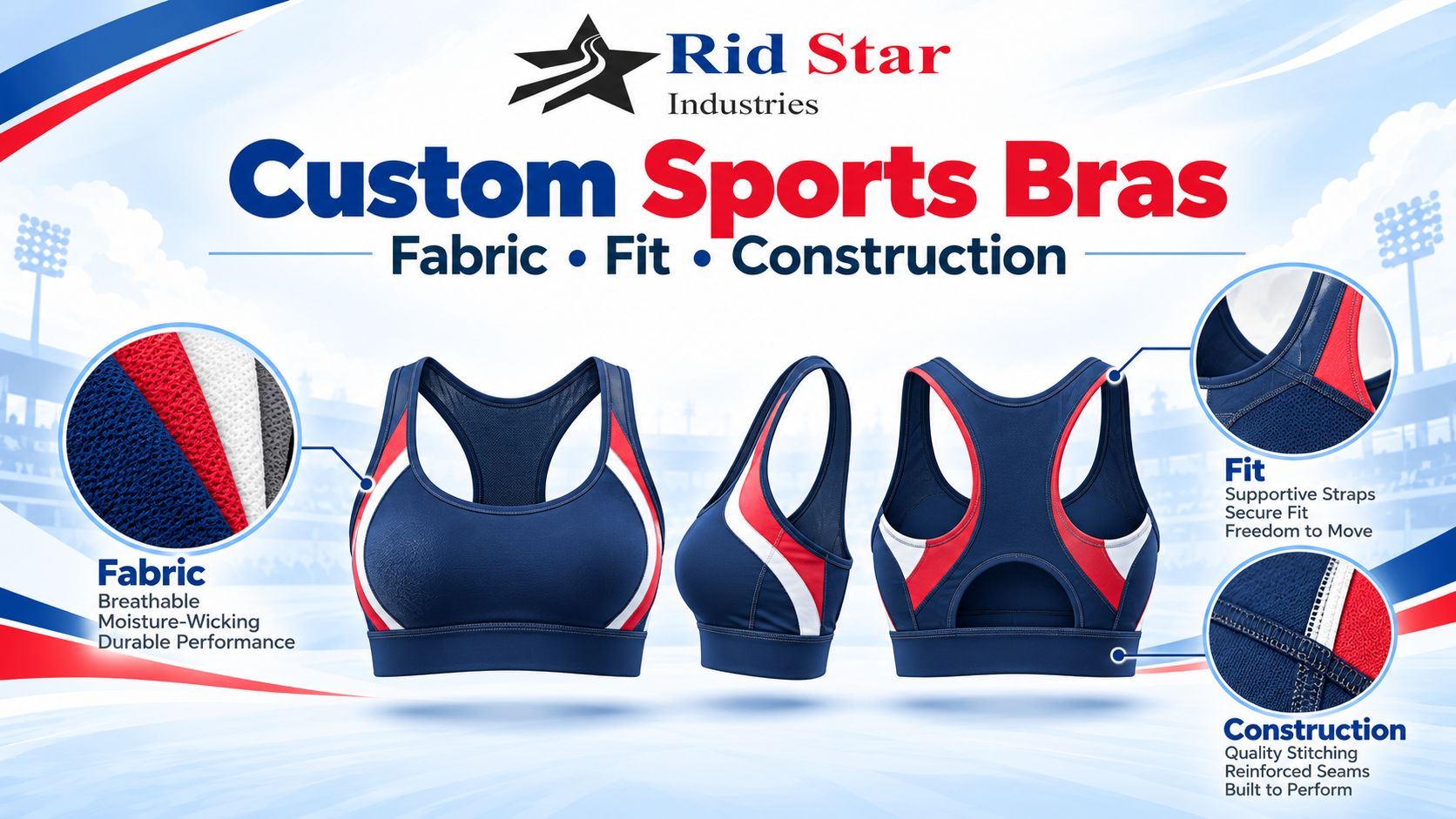
Custom Sports Bras: Fabric, Fit and Construction Buyers Should Specify
A sports bra design can look straightforward in a product mockup while leaving important manufacturing decisions unanswered. The outer fabric, lining, underband, straps and cup construction all need clear specifications before a sample can be assessed.
For activewear brands, wholesalers and private-label buyers, ordering custom sports bras starts with defining the intended product and customer. A cropped training top and a sports bra intended for running should not be treated as interchangeable simply because they have a similar appearance.
This guide explains what buyers should specify, what to inspect on samples and which details to confirm before bulk production.
Define the Intended Use and Coverage
Tell the manufacturer who the product is for, the activities you intend to market it for and the size range you need.
Provide front, back and inside reference images. Identify which details you want to reproduce and which you want to change. A reference photograph alone may not reveal whether the garment has separate lining, removable pads or concealed elastic.
Specify the neckline, armhole coverage, back shape and body length. For a longline style, show where the lower edge should sit and how it should coordinate with the waistband of matching leggings.
Keep support claims separate from styling decisions. A tight fit, thicker fabric or racerback shape does not by itself establish a particular support rating. If your product will carry a support claim, agree on suitable testing and supporting evidence before using that claim in marketing.
For the wider collection brief, see our custom activewear manufacturing guide.
Specify the Outer Fabric and Lining Separately
“Stretch fabric” is not a complete material specification. Ask the manufacturer to identify the proposed composition, fabric construction and GSM for both the outer layer and any lining.
Review a physical fabric reference where possible. Record its colour, surface finish, stretch direction and how it returns towards its original dimensions after stretching.
Do not select a sports bra fabric using GSM alone. Assess the material as part of the finished construction, including the lining, elastic and seams.
For light colours, inspect coverage with the proposed lining and pads in place. Check whether the lining changes the appearance of the outer colour or whether pad edges show through.
When developing a matching set, compare the bra and leggings together. Different fabric constructions or layers can produce a visible difference even when both garments use the same colour reference. Our custom leggings fabric, fit and opacity guide covers the corresponding checks for bottoms.
Agree on Cups, Padding and Internal Construction
State whether the design should have no pads, removable pads or fixed padding. Confirm the proposed construction with the manufacturer rather than leaving it to interpretation.
For removable pads, specify the pad shape and size, the pocket opening and how the pads should sit inside the garment. Check whether they can be inserted and removed without excessive pulling.
For fixed padding, inspect how it is secured and whether the finished front appears even. Review the inside as carefully as the outside.
Ask which components change across the size range. Using the same pad or internal dimensions in every size should not be assumed acceptable without reviewing the result.
The approved sample should record the actual construction intended for production. If a component changes later, assess its effect before accepting the substitution.
Define the Underband and Straps
Show the underband construction in your specification: exposed elastic, enclosed elastic or another agreed finish. Record its finished width, relaxed measurement and the agreed method for checking stretch.
For straps, specify their width, position and whether they are fixed or adjustable. If adjusters, rings or closures are required, confirm their material, dimensions and finish.
During fitting, check whether the underband stays level, whether straps slip or dig in and whether edges roll or fold during movement.
Also assess how the garment is put on and removed. A pull-on sample may look correct once worn but be difficult to pass over the shoulders.
Record the location and circumstances of each problem. “The back underband rides up when both arms are raised” gives the manufacturer clearer information than “the fit is wrong.”
Establish a Size Chart and Measurement Method
Agree whether the range uses letter sizes, band-and-cup sizes or another defined system. Do not assume your existing T-shirt size chart will provide the right fit.
Distinguish customer body measurements from finished garment measurements. The specification should explain how each garment measurement is taken and identify the agreed tolerance.
Useful measurement points may include:
- Underband width measured flat and relaxed.
- Front and back body length.
- Strap length and adjustment range.
- Neckline and armhole depth.
- Cup or front-panel dimensions where relevant.
Review fit across the intended size range. Approval of one sample size does not establish that the smallest and largest sizes fit correctly.
For coordinated sets, confirm whether buyers can select different top and bottom sizes, and show the quantities for each garment separately.
Review the Physical Sample During Movement and After Washing
Photos and videos help check appearance, measurements and construction details. They cannot replace wearing the garment when assessing fit and comfort.
Arrange fitting with people whose measurements correspond to the intended sizes. Ask them to assess the sample during movements relevant to its proposed use.
Check for underband movement, strap slippage, neckline gaping, unwanted exposure and pressure at seams or edges. Inspect stitching for broken threads or openings after movement.
Wash the sample according to the proposed care instructions, then reassess its dimensions, appearance and fit. Check for twisted straps, displaced pads, puckered seams and changes in elastic recovery.
These checks help identify development problems; they do not establish a tested support rating.
Record the findings and required changes using our custom apparel sample review guide. Keep the approved sample and specification together as production references.
Approve Branding on the Actual Garment
Specify logo dimensions and placement from clear garment reference points. Confirm the decoration method on the selected material and construction.
Inspect the logo while the garment is relaxed and worn. Look for distortion, stiffness or uncomfortable contact on the inside.
Agree where size, brand and care labels will sit. Check whether labels or their attachment seams rub during fitting.
Before approval, confirm the complete combination of fabric, lining, pads, elastic, trims, decoration and labels. A change to one component may require another sample review.
Discuss Your Custom Sports Bra Requirements with Rid Star
Rid Star Industries is a B2B custom sportswear and apparel manufacturer based in Sialkot, Pakistan.
Share your sports bra design references, intended use, fabric preferences, size range, quantities and branding requirements so the proposed construction and available options can be confirmed.
Our standard minimum order is 10 pieces per design and colourway, with mixed sizes allowed. Confirm material and trim availability for your specific order before proceeding.
Explore our custom activewear and fitness wear manufacturing service to discuss sports bras, matching leggings and private-label collection requirements.
Use the quote builder to provide your requirements and artwork. Include any matching leggings or other collection pieces, your delivery destination and required arrival date.