
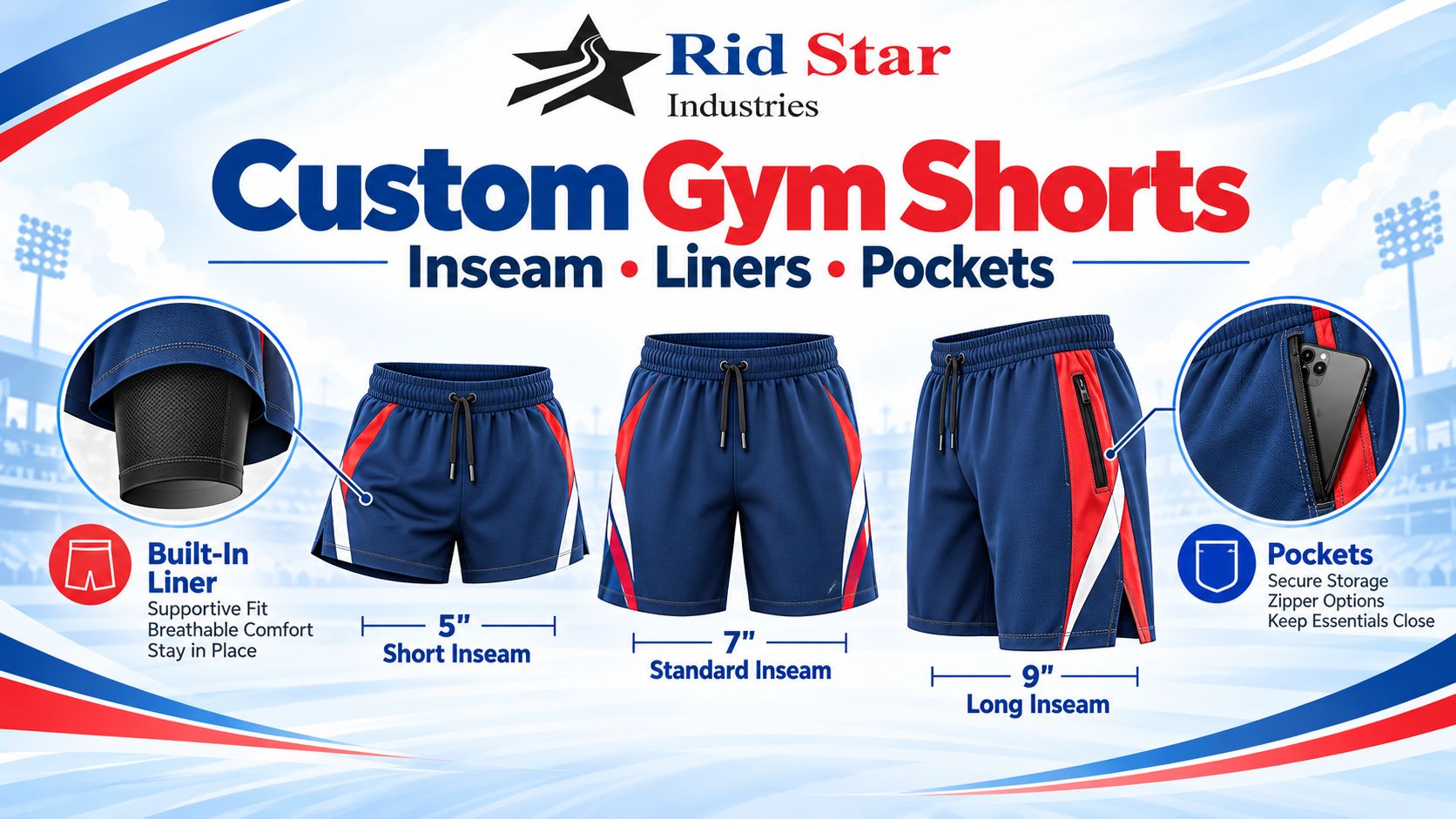
Custom Gym Shorts: Inseam, Liners and Pockets Buyers Should Specify
A quotation for custom gym shorts can leave important details unresolved. Two products described as “training shorts” may have different lengths, waistbands, pocket construction and inner liners—even when their reference images look similar.
For activewear brands, gyms and wholesalers, those differences affect the product customers receive and the specification a manufacturer needs. Before requesting samples, define how the shorts should fit, move and carry everyday essentials.
This guide explains the product details to include in your brief and the checks to make before approving production.
Start with the Intended Use
Tell your manufacturer whether the shorts are intended for strength training, running, general gym sessions or leisure wear. Identify the intended customer and explain whether the fit should be close, relaxed or somewhere between.
List essential features separately from options you are still considering. These might include an inner liner, zipped pockets, side openings or a particular waistband design.
A reference garment can help communicate the result you want. Mark which features should be retained and which should change rather than asking the manufacturer to reproduce an image without further instructions.
For the wider collection brief, our custom activewear manufacturing guide explains how to organise products, quantities, sizing and branding.
Specify Inseam and Overall Length Separately
The inseam is measured along the inside leg, from the crotch seam to the hem. It does not describe the complete length or fit of the shorts.
Provide the inseam alongside the rise, outer length and leg opening. Agree on measurement points and state whether the waistband is included in the outer-length measurement.
For example, two shorts with the same inseam can sit differently on the wearer because their rise and waistband position differ. A product photograph alone cannot resolve that difference.
Record measurements for a defined sample size:
| Measurement | What to clarify |
|---|---|
| Inseam | Inside-leg measurement from crotch seam to hem |
| Outer length | Reference points and whether the waistband is included |
| Front and back rise | Measurement method and intended waist position |
| Leg opening | Finished width or circumference, clearly identified |
| Waist | Relaxed measurement and any agreed stretched measurement |
Check length and coverage while the sample is worn. Review squatting, lunging, sitting and other movements relevant to the intended activity. Record whether the hem rides up, the opening restricts movement or the garment exposes more than intended.
Decide Whether the Shorts Need a Liner
Specify whether you want unlined shorts, a brief-style liner or an inner-short liner. These are different constructions and should be identified in the quotation.
Unlined shorts allow wearers to choose their own underlayer. A built-in liner adds another garment component whose fabric, fit and attachment need approval.
For a lined design, specify:
- Liner type and intended fit.
- Fabric composition and reference.
- Liner length, where applicable.
- Seam positions and attachment points.
- Any liner pocket or additional feature.
Review the outer shorts and liner together. Check whether the liner pulls on the waistband, twists, restricts movement or extends beyond the shell unexpectedly.
Do not treat a close-fitting liner as evidence of a particular compression level or performance benefit. If your brand intends to make such claims, agree on the supporting assessment required.
Define the Waistband and Drawcord
Tell the manufacturer the finished waistband height, elastic arrangement and whether a drawcord is required.
Specify whether the drawcord exits inside or outside the garment. Include its position, usable length and finishing requirements in the approved design.
During sample review, check whether the waistband stays in position without excessive tightening. Note rolling, uncomfortable pressure or repeated adjustment during movement.
Check the drawcord’s operation and attachment. If it is difficult to adjust or slips into the waistband, describe the issue and request a construction review.
For children’s products, identify the age group and destination market early so applicable drawcord requirements can be checked before approval.
Specify Pockets by Function
“Two side pockets” does not explain how deep they should be, how they should close or what they need to hold.
For each pocket, identify its location, opening dimensions, depth, material and closure. If a zip is required, specify the intended arrangement and check its operation in the sample.
Test the pocket with a representative item. For a phone pocket, assess access, movement and whether the item pulls the shorts out of position. For keys or other small objects, check whether the agreed closure retains them during the intended activity.
Review pockets while sitting and bending as well as standing. A pocket that looks neat when empty may behave differently when loaded.
Ask the manufacturer to identify any pocket feature that changes the pattern, construction or quoted cost.
Review Shell Fabric, Seams and Decoration Together
Approve the outer fabric and any liner material separately. Record composition, construction, weight and fabric reference for each.
Assess the finished sample for feel, coverage and freedom of movement. Do not assume a fabric is suitable because it is described as lightweight or stretchy.
Inspect seams around the crotch, pockets, waistband and side openings. Look for openings, skipped stitches, uneven joins and uncomfortable bulk. During movement, check whether seams pull or restrict the garment.
Supply logo dimensions and placement references. Review decoration on the actual proposed fabric, particularly where the garment stretches or folds during use.
Record any required wear, washing or performance checks before approval. Keep the conditions and results with the sample reference.
Approve a Complete Sample Specification
Bring the product decisions into one dated specification. Keep the latest measurements, fabric references, construction details and artwork together.
Your approval record should identify:
- The sample size and intended size range.
- Shell and liner specifications.
- Waistband and drawcord details.
- Pocket positions, dimensions and closures.
- Logo size and placement.
- Required corrections and their approval status.
One sample size does not confirm the fit of the whole range. Agree which additional sizes need review and how measurements change between sizes.
Use our custom apparel sample-review guide to organise feedback and document what has been approved.
Discuss Custom Gym Shorts with Rid Star Industries
Rid Star Industries manufactures custom activewear and apparel for international B2B buyers, including brands, gyms, wholesalers and distributors.
Explore our activewear and fitness wear manufacturing service to discuss your gym shorts design, materials and private-label requirements.
Our minimum order quantity is 10 pieces/sets. Share your proposed style, colour and size breakdown so available combinations can be confirmed.
Include your intended activity, length and fit preferences, liner requirements, pocket details, artwork and delivery destination. Mark undecided features clearly so they can be discussed before sampling and quotation approval.