
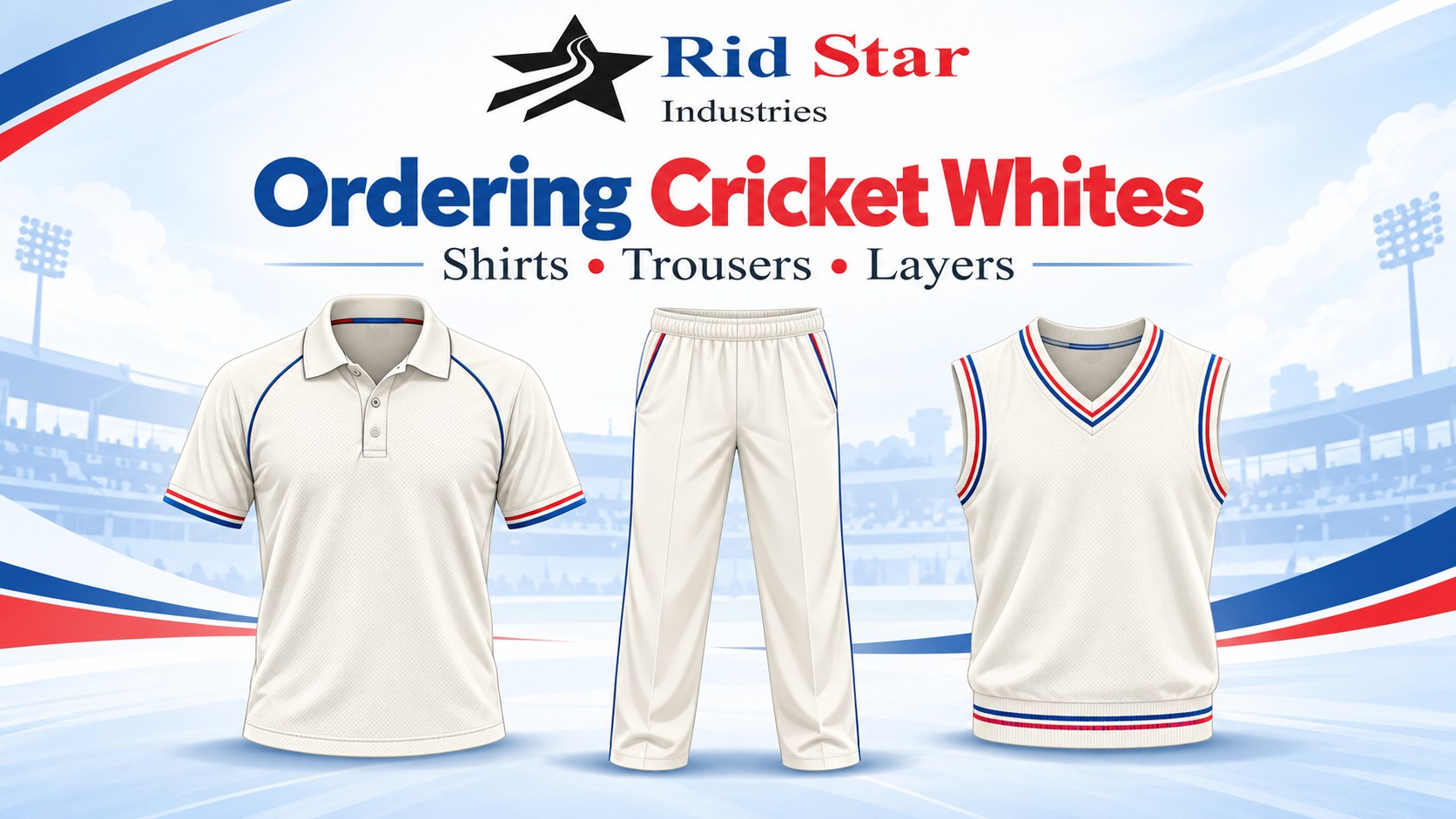
Ordering Cricket Whites: Matching Shirts, Trousers and Layers
Ordering cricket whites involves more than choosing a white shirt and matching trousers. Garments approved separately can look different when worn together, and a standard shirt-and-trouser size combination may not suit every player.
For clubs, schools, teamwear brands and distributors, the buying brief should define the complete kit: its shade, individual garments, fit, branding and order breakdown.
Here is what to specify before approving a custom cricket-whites order.
Define What Each Kit Includes
Start by listing the garments you need. A shirt-and-trouser set is different from a package that also includes a sleeveless layer or long-sleeved outer garment.
Identify optional items separately so the supplier can confirm availability and quote accurately.
| Garment | Details to specify |
|---|---|
| Playing shirt | Sleeve length, collar, fit, fabric and branding |
| Trousers | Waist construction, fit, leg length, pockets and finishing |
| Optional layer | Garment type, sleeve option, neckline and room over the shirt |
| Complete set | Included items, individual sizes and packing arrangement |
Confirm whether players can receive different shirt and trouser sizes within a set. Do not assume that a medium shirt must be paired with medium trousers.
If some players need additional shirts or replacement trousers, list those separately from complete sets.
Approve a Physical Shade Reference
“White,” “off-white,” “cream” and “ivory” should not be treated as interchangeable colour instructions.
Choose a physical reference for the intended shade and ask the manufacturer to assess each proposed fabric against it. A photograph or screen preview can help communicate the direction, but it should not be the only basis for final approval.
Review the shirt, trousers and any optional layer together under the same lighting. Look at the collar, waistband, pocket material and other visible components as well as the main fabric.
Different materials can have different surface textures and appearances. Agree on an acceptable coordinated result before production rather than assuming every fabric will look identical.
Keep the approved swatches and sample references for future orders.
Specify Fabric for Each Garment
A coordinated kit does not require the same fabric in every item.
The shirt, trousers and optional layer perform different roles. Ask the manufacturer to propose suitable materials for each and record the composition, construction and GSM separately.
Discuss the intended playing conditions and the team’s priorities, including comfort, movement, coverage and care.
Avoid choosing solely by weight. GSM identifies fabric weight per square metre; it does not establish all the properties that matter in a finished garment.
Our guide to choosing fabric for sports uniforms explains the material questions to resolve before approving your kit.
Check Coverage on Finished Samples
Assess how opaque the proposed white garments are when worn, rather than judging only a folded fabric swatch.
Check the shirt and trousers in good lighting with the intended underlayers. Review the trousers while standing, bending and moving into a fielding position.
Pay attention to areas where the fabric stretches across the body. Also check whether pocket bags, labels or other internal components show through more than expected.
If coverage is insufficient, discuss the material or construction with the manufacturer. Ask how any proposed change would affect comfort, weight and price.
Record what has been approved so coverage does not remain an undefined expectation.
Fit the Shirt, Trousers and Layers Together
Collect shirt and trouser sizes separately. Request measurement charts that explain whether the figures refer to the wearer’s body or the finished garment.
For shirts, check shoulder movement, sleeve comfort and body length in batting, bowling and fielding positions.
For trousers, review the waist, seat, thigh, rise and leg length. Assess movement with the usual underlayers and relevant protective equipment.
Confirm whether trousers will arrive with finished hems or require adjustment. If different leg lengths are needed, include them in the order breakdown.
Try optional layers over the approved shirt. Check that the neckline, armholes and sleeves allow comfortable movement without excessive bunching.
Avoid approving an entire size range from one person’s fitting. Include representative wearers for the fits and sizes being ordered.
Coordinate Branding Across the Kit
Prepare separate placement instructions for each garment.
A club crest positioned correctly on a shirt may need different placement on a sleeveless layer. Trouser branding also needs its own dimensions and reference points.
Specify the decoration method, artwork size, colours and position for each element. Ask the supplier to confirm compatibility with the selected material.
Review embroidery backing, print appearance and any visible marks on the white fabric. Approve decorated samples where the finish is important to the buying decision.
Check your competition’s clothing and sponsor requirements before approving coloured trims or logo layouts. Do not assume that a design accepted in one competition will be accepted everywhere.
Review the Set After an Agreed Wash Check
Discuss sample washing before bulk approval, using the proposed care instructions.
After washing and drying, compare the garments together again. Check their dimensions, shade appearance, seams, collars and decoration.
Record the washing method and any agreed acceptance criteria. An informal sample wash is a useful check, but it should not be presented as laboratory certification or a guarantee of long-term performance.
If a fabric or decoration method changes after approval, ask whether the relevant checks need to be repeated.
Organise Packing and Replacement Orders
For individual player packs, provide a roster showing the shirt size, trouser size, optional items and quantities for each person.
Ask how packs will be identified and how additional loose garments will be separated. For wholesale supply, specify the required size labels, assortment and carton breakdown.
Keep each garment’s product reference and approved shade information. Before a later order, confirm material availability and whether a new sample or shade approval is needed.
Do not assume that newly manufactured garments will exactly match older kit that has already been worn and washed.
Discuss Your Custom Cricket Kit Requirements
Rid Star Industries is a B2B custom sportswear and apparel manufacturer based in Sialkot, Pakistan.
Explore our custom cricket uniform manufacturing service and share your required garments, quantities, size breakdown, shade references and branding.
Our minimum order quantity is 10 pieces/sets. Specify what each set should contain and identify optional layers or separate garments so availability and order combinations can be confirmed.
Include your delivery destination and required arrival date when preparing your enquiry.