
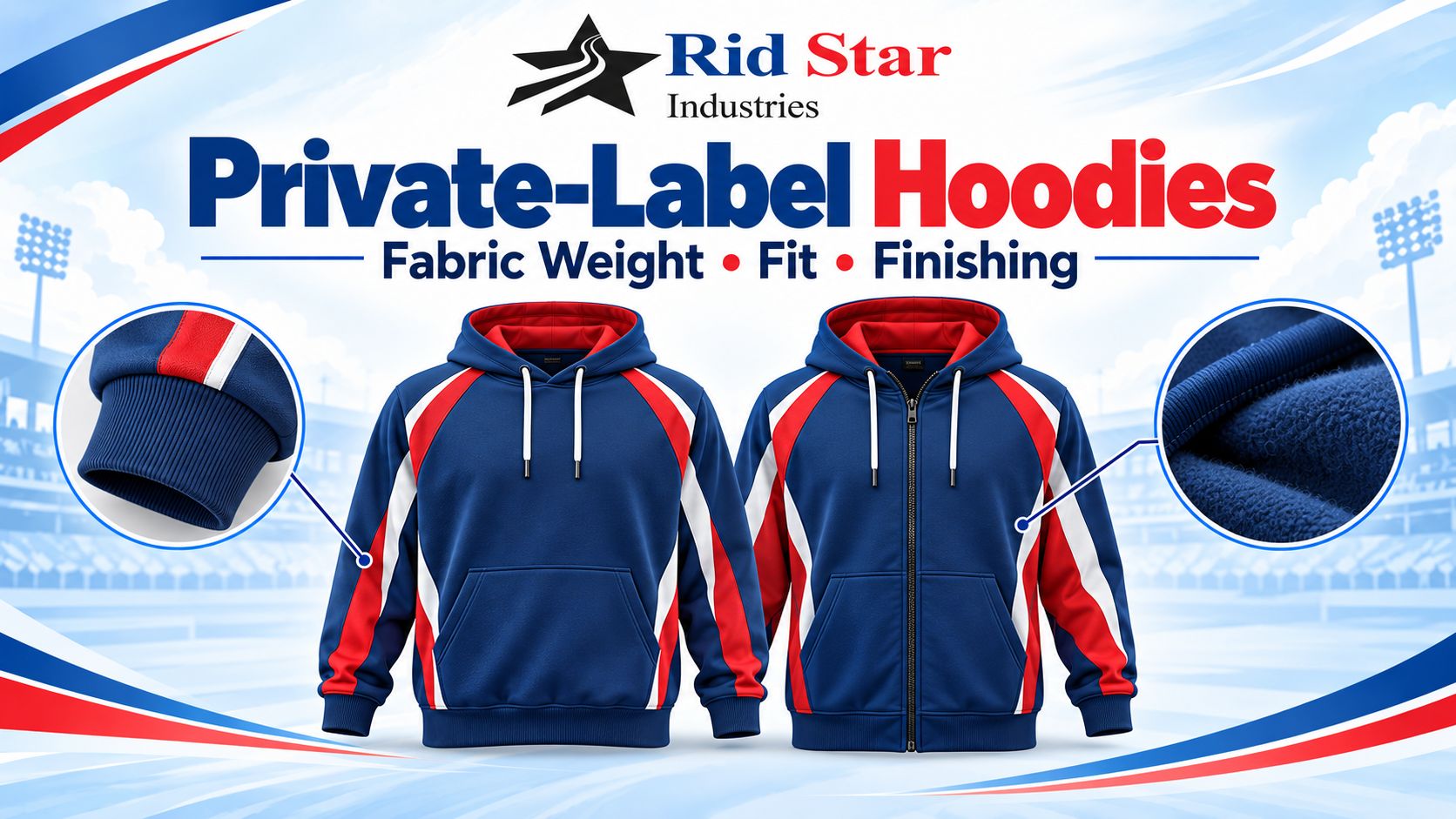
Private-Label Hoodies: Fabric Weight, Fit and Finishing Buyers Should Specify
Ordering private-label hoodies requires more than selecting a colour and supplying a logo. Fabric composition, inner finish, garment measurements and trim details all influence what the manufacturer produces.
Two hoodies described as “heavyweight oversized fleece” can have different shapes, surface textures and finishing. For apparel brands, wholesalers and distributors, a useful brief turns those descriptions into details that can be quoted, sampled and approved.
This guide explains the hoodie specifications buyers should resolve before bulk production.
Define the Hoodie Style and Intended Use
Start by identifying whether the product is a pullover or zip hoodie. Explain who will wear it, the intended season and whether it belongs to a streetwear collection, gym range, teamwear programme or general casualwear line.
Describe the intended silhouette. “Oversized” should lead to a discussion of chest width, shoulder position, sleeve shape and body length rather than simply selecting a larger standard size.
Provide front and back drawings or a reference garment. Mark which details should be retained and which should change, including pockets, hood construction, seams and branding positions.
If your collection includes several hoodie styles, give each one a separate reference so specifications do not become mixed during development.
Specify Composition, GSM and Inner Finish Together
Ask for the proposed fabric’s fibre composition, construction, finished weight and reference code. A fabric name alone does not establish these details.
GSM means grams per square metre. It describes fabric weight per unit area, not the weight of the completed hoodie. A higher GSM does not by itself prove better quality or suitability for your collection.
Review the inside and outside of the material. French terry commonly has a looped inner surface, while brushed sweatshirt fleece has a raised inner finish. Request swatches of the actual options being quoted rather than relying on those descriptions alone.
Compare the materials for feel, drape and the appearance you want in the finished garment. Record the approved composition, GSM, finish and colour reference together.
Avoid choosing a fixed fabric weight before discussing the intended product. A hoodie designed for layering may need a different material from one intended to have a substantial, structured feel.
Turn Fit Descriptions into Measurements
Provide a measurement chart for a defined sample size. Distinguish body measurements from finished-garment measurements and agree how each point will be measured.
Useful hoodie measurements include:
| Area | What to define |
|---|---|
| Chest | Flat width at an agreed position |
| Body length | Starting point and whether the hem rib is included |
| Shoulders | Seam-to-seam measurement where applicable |
| Sleeves | Starting point, length and relevant widths |
| Cuffs and hem | Finished dimensions and measurement condition |
| Hood | Height, depth and opening measurements |
Sleeve measurements require particular care when comparing different constructions. A dropped-shoulder hoodie and a raglan hoodie may use different reference points, so their sleeve-length figures cannot automatically be compared.
Assess the sample on someone representing the intended customer. Check reaching, sitting and putting the garment on over the expected underlayer. Record where it pulls, rides up or creates unwanted bulk.
Agree how measurements change between sizes and which additional sizes need sampling. Approval of one medium garment does not confirm the entire range.
Review the Hood, Cuffs and Hem as Separate Components
Specify whether the hood uses one fabric layer or a lining, and identify the material for each. Show the intended panel arrangement and any seam or opening details in the design brief.
Try the hood both raised and lowered. Check its depth, opening and how it sits against the neckline. Note whether it pulls the garment backwards or interferes with the intended fit.
For cuffs and hem rib, confirm composition, construction, colour and finished dimensions separately from the main body fabric.
Assess whether cuffs can be put on comfortably and whether the hem creates the intended shape. Review how these components recover after normal stretching and after the agreed washing checks.
If drawcords are required, specify their position, length and end finish. Identify the age group and destination market so applicable requirements can be checked before approval.
Define Pocket and Zip Details
For a pullover hoodie, provide the kangaroo pocket’s dimensions, opening shape and placement. Check both openings and assess whether the pocket is comfortable to use.
For a zip hoodie, specify the zip arrangement, length, colour and puller requirements. Confirm whether the design needs an exposed or covered zip and how the surrounding seams should be finished.
Operate the zip on the sample and check its alignment. Inspect the front with the garment open and closed, looking for uneven edges or distortion.
Review pockets with their intended contents where relevant. Record any pulling, awkward access or changes to the garment’s shape.
Keep optional trims clearly identified until their availability and cost have been confirmed.
Approve Decoration on the Actual Hoodie
Supply artwork at the intended dimensions, with placement measured from defined garment points. Include separate instructions for chest, sleeve, back and hood decoration.
Consider how seams, pocket edges and zips affect the design. A graphic approved on a flat drawing may need adjustment when positioned on the finished garment.
For screen printing or heat transfer, review the proposed decoration on the selected fabric. Check its appearance, feel and performance after the agreed care review.
For embroidery, inspect lettering, edges, backing and any pulling around the design. Approve the actual logo size rather than assuming a detailed design will reproduce equally well at every scale.
Our sublimation versus screen printing guide explains fabric and artwork considerations when comparing those printing methods.
Confirm Labels, Packing and Sample Approval
Identify the brand label, size information, care-label artwork and attachment positions. Review label comfort around the neckline and confirm that the wording matches the approved files.
Specify whether the hoodie needs individual packing, size stickers, hang tags or other finishing. Our private-label apparel labels and packaging guide explains how to prepare those details.
Before approval, assess the completed sample against the latest specification. Record measurements and appearance before and after the agreed washing review, including changes to shape, seams, rib and decoration.
Use our custom apparel sample-review guide to consolidate corrections and document approval.
Keep the approved garment, fabric references, artwork and dated specification together. If a material or trim changes later, review the proposed substitution before production proceeds.
Discuss Your Private-Label Hoodie Order with Rid Star
Rid Star Industries is a B2B custom sportswear and apparel manufacturer based in Sialkot, Pakistan. Our product range includes hoodies and other casual and activewear garments, with printing, embroidery, private-label and packaging options.
Our minimum order quantity is 10 pieces/sets. Share your proposed styles, colours and size breakdown so available combinations and any component requirements can be confirmed.
For a hoodie enquiry, include the pullover or zip style, intended fit, fabric preferences, design references, branding and delivery destination. If you have a reference garment, explain which features you want to retain or change.