
Sublimation vs Screen Printing: How to Choose for Custom Apparel
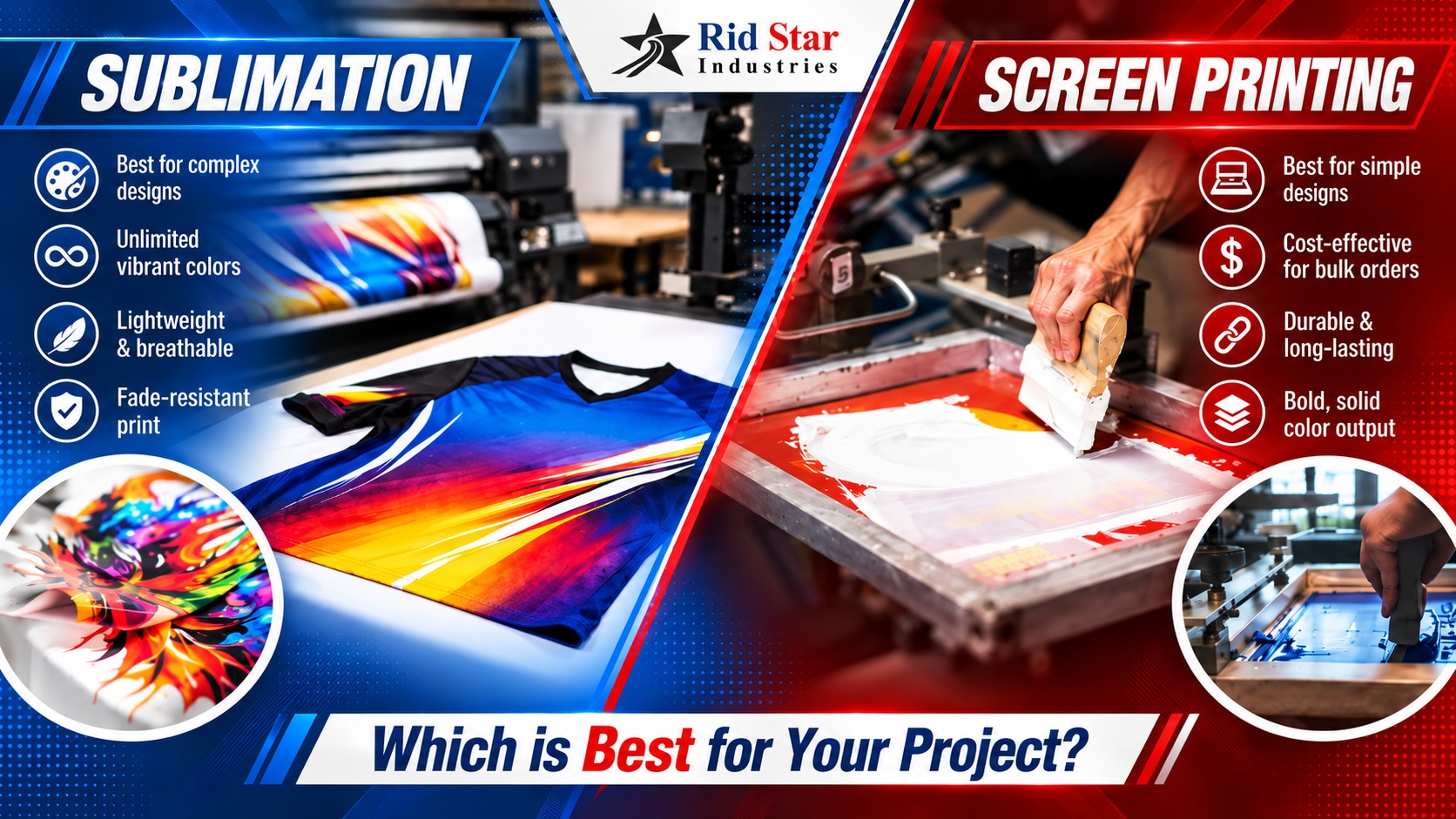
Choosing between sublimation and screen printing starts with your product, fabric and artwork. A sports brand ordering patterned jerseys has different requirements from a wholesaler sourcing cotton T-shirts with a single-colour logo. Comparing the methods only by price can overlook differences that affect the finished garment and future reorders.
This guide compares sublimation vs screen printing for B2B custom apparel orders, covering fabric compatibility, design options, print feel, personalisation, sampling and cost. It will help you prepare a clearer manufacturing brief and assess which method suits your order before approving production.
How Sublimation and Screen Printing Work
Sublimation Printing
Sublimation uses heat to transfer a printed design from transfer paper into polyester fibres. The colour becomes part of the fabric rather than forming a separate surface layer.
For custom apparel, this makes sublimation useful for detailed patterns, gradients, and designs that incorporate logos, names and numbers. In cut-and-sew production, fabric panels can be printed before stitching, allowing the design to cover much of the garment.
Conventional sublimation works best on white or light-coloured polyester fabric. It is not a direct replacement for screen printing on cotton. Buyers should confirm the fabric composition and approve a physical sample because the base fabric affects the finished colours.
Screen Printing
Screen printing pushes ink through a prepared mesh screen onto the fabric. Each printed colour typically requires a separate screen, followed by curing appropriate to the ink system.
It is commonly used for logos, lettering and graphics on products such as T-shirts, hoodies and sportswear. Suitable inks can be selected for cotton, polyester and blends, but the same ink and production settings will not suit every fabric.
For polyester apparel, the manufacturer must account for dye migration, where colour from the fabric can discolour the printed design. Stretch garments also need a compatible ink system. Ask to assess the print’s feel, stretch and wash performance on the actual fabric proposed for your order.
Start with Your Fabric and Product Requirements
Choose the printing method alongside the fabric, rather than treating decoration as a separate decision after the garment is approved.
For a polyester jersey with an all-over pattern, sublimation is a practical option to discuss with your manufacturer. For a cotton T-shirt with a chest logo, screen printing is generally the more relevant of these two methods.
Polyester does not automatically mean you must choose sublimation. A polyester training shirt with a small logo may also be suitable for screen printing, provided the ink system matches the fabric and its intended use.
For leggings, fitted tops and other stretch apparel, assess the decorated fabric while stretched as well as at rest. Check whether the design changes appearance, restricts movement or shows unwanted colour changes.
Before requesting a quotation, provide:
- The product type and intended use.
- Fabric composition, construction and GSM, if already selected.
- The garment’s base colour.
- Artwork showing print size and placement.
- Any stretch, coverage or comfort requirements.
If you have not selected a fabric, explain the performance you need and request suitable options. Our guide to choosing the right fabric for sports uniforms explains how to compare composition, construction and GSM before approving a sample.
Compare Artwork, Print Coverage and Personalisation
All-Over Patterns and Detailed Designs
Sublimation is well suited to designs that combine multiple colours, gradients and patterns across polyester garment panels. However, printing the panels does not guarantee perfect pattern alignment across every seam.
If your design includes stripes, large graphics or details crossing panel joins, ask the manufacturer to explain placement limitations. Review the finished garment sample, including side seams, sleeves and areas around zips.
Screen printing is commonly used for defined print areas, such as chest logos, back graphics and sleeve branding. Detailed and multicolour designs are possible, but artwork separation, screen preparation and print placement affect production requirements.
Share the actual artwork when asking for a comparison. The number of colours alone does not fully describe how difficult a design will be to produce.
Names, Numbers and Order Variations
For sublimated garments, individual names and numbers can be included in each printed design. Buyers still need to approve an accurate size and personalisation list before production.
Screen printing can suit repeated artwork across an order, such as the same brand logo on every T-shirt. If each garment needs a different name or number, ask how those variations will be produced and priced. The manufacturer may propose a separate decoration method for the personalised details.
For either method, supply one final order sheet matching each size to its required name, number and design version. Agree on a deadline for changes so that late corrections do not disrupt production.
For a practical way to organise player details and final approvals, use our custom team uniform ordering checklist.
Assess Print Feel and Durability
Sublimation colours the polyester fibres without adding a separate print layer. The finished garment’s feel therefore depends largely on the selected fabric and its finishing.
Screen printing can produce different finishes depending on the ink, coverage and application. Do not assume every screen print will feel thick or stiff. Ask for a sample that represents your artwork at its intended size, particularly if it covers a large area.
Avoid choosing either method based on a general promise that it “lasts longer.” Screen-print performance depends on fabric compatibility, ink selection and correct curing. Sublimated garments also need suitable materials, controlled production and appropriate care.
Evaluate a decorated sample using the proposed washing instructions. Check for colour change, staining, distortion and any cracking or lifting where a surface print is present. For stretch apparel, inspect the design during movement and after the fabric relaxes.
Agree on any required wash-testing procedure and acceptance criteria before bulk production. A sample that looks good when new does not establish how it will perform throughout use.
Compare the Full Order Cost
Neither sublimation nor screen printing is always the cheaper option. A useful comparison starts with the same garment specification, order quantity and delivery requirements.
Screen-print quotations can be affected by the number of colours, print locations and screens required. Repeating the same artwork across a larger order can spread setup costs across more garments.
Sublimation does not require a separate screen for each colour, but artwork preparation, printed area, fabric, transfer work, cutting and stitching still affect the finished price. Individual names and numbers also require accurate file preparation and checking.
Ask the supplier to state whether the quotation includes:
- Artwork preparation and setup.
- Sampling and sample delivery.
- All print locations and personalisation.
- Labels, packaging and other finishing.
- Freight and any excluded import charges.
For repeat orders, confirm the minimum quantity, setup charges and expected colour consistency. Keep the approved artwork files, colour references and garment specifications so the next order can be assessed against the same requirements.
When reviewing offers from different suppliers, use our guide to comparing custom apparel manufacturing quotes to check that each price covers the same order requirements.
Approve a Production-Representative Sample
Before approving bulk production, request a sample made with the proposed fabric, decoration method and garment construction. If anything differs from the planned production specification, ask the manufacturer to identify it clearly.
Review the sample against a written checklist:
- Colour: Compare the physical print with the agreed colour reference.
- Artwork: Check logo proportions, fine details, spelling and numbers.
- Placement: Verify print dimensions and position on the garment.
- Coverage: Inspect light areas, stretched sections and panel joins.
- Comfort: Assess the print’s feel during normal movement.
- Care performance: Review the agreed washing checks and their results.
- Finishing: Inspect seams, labels and packaging requirements.
A digital mockup helps confirm the design layout, but it cannot establish the finished fabric feel, print colour or wash performance.
Record any corrections and confirm how they will be checked before production proceeds. Keep the approved sample and specification as references for bulk inspection and future reorders.
Which Printing Method Suits Your Order?
Consider sublimation when your product uses suitable polyester fabric and the design includes all-over patterns, gradients or individual names and numbers.
Consider screen printing when your order needs defined graphics on cotton, polyester or blends, particularly when the same artwork repeats across many garments. Confirm that the ink system suits the selected fabric and any stretch requirements.
A brand sourcing several product types may use both methods: sublimation for patterned polyester jerseys and screen printing for cotton promotional T-shirts, for example.
Make the final decision using your actual artwork, a complete quotation and an approved physical sample. The right choice is the method that meets your product requirements consistently within your budget.
Discuss Your Custom Apparel Order with Rid Star Industries
Rid Star Industries manufactures custom sportswear, activewear, casual apparel and fitness wear in Sialkot, Pakistan, for international B2B buyers. Our capabilities include sublimation, screen printing, embroidery, private labels and custom packaging, with a minimum order quantity of 10 pieces/sets.
Share your product type, quantity, artwork and preferred fabric so we can discuss a suitable manufacturing and decoration approach. If you have not chosen a printing method, include the look, feel and intended use you want to achieve.
Request a custom apparel quote to submit your requirements and artwork.