
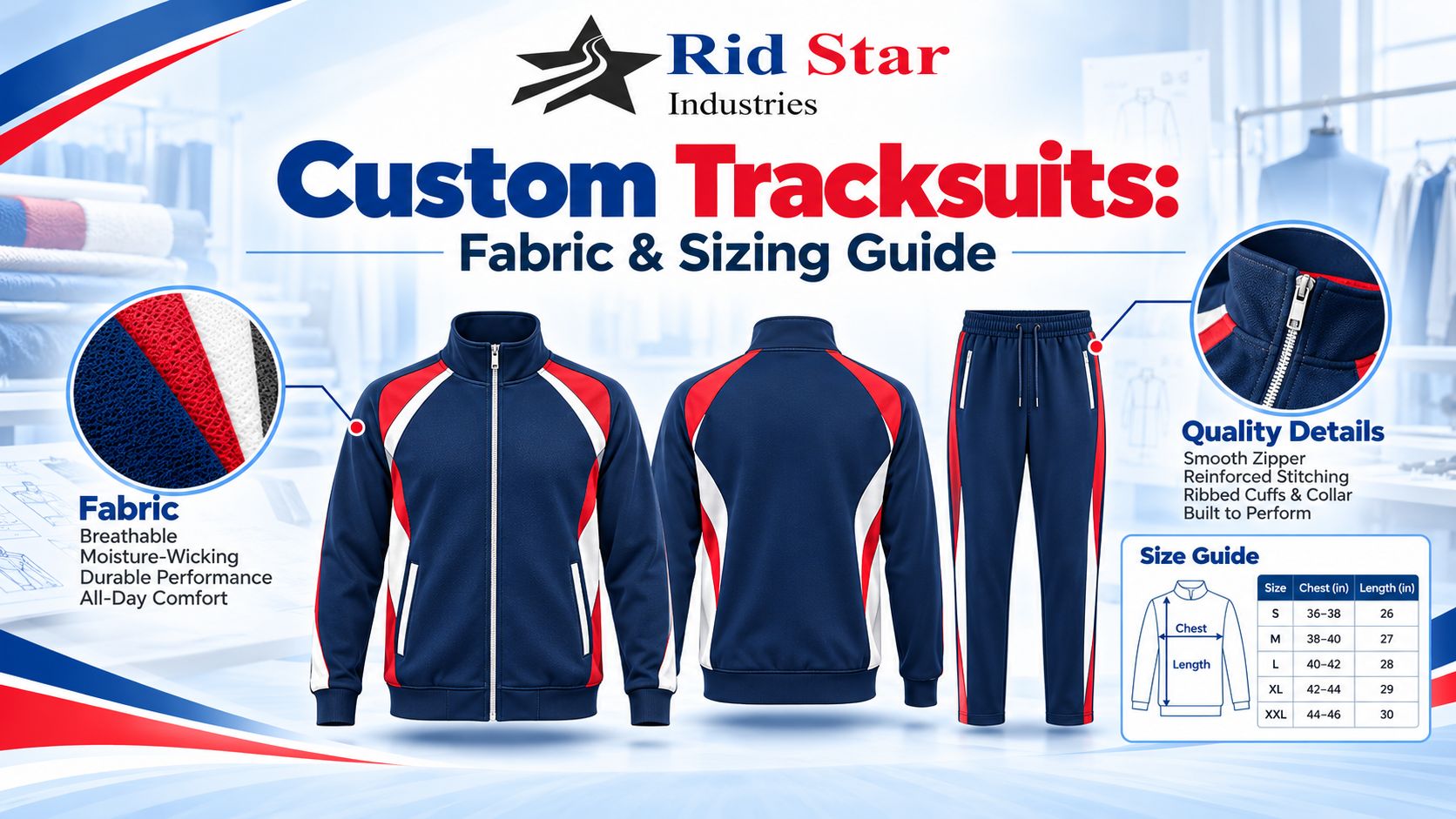
Custom Tracksuits: Fabric, Fit and Jacket–Trouser Sizing for B2B Buyers
A tracksuit is usually ordered as a coordinated set, but its jacket and trousers need separate specifications. A jacket can fit correctly while the trousers are too long, too narrow through the thigh or uncomfortable at the waist.
For sports clubs, apparel brands, schools and wholesale buyers, ordering custom tracksuits means agreeing on more than colours and chest logos. Fabric, layering space, garment measurements, fastenings and size combinations all affect whether the finished set suits its intended wearer.
This guide explains the details buyers should prepare before sampling and bulk production.
Start with the Intended Use
Explain whether the tracksuit is intended for team travel, warm-ups, training, school use or a casual clothing collection. State the expected weather conditions and what wearers will normally have underneath.
For example, a team travel jacket worn over a T-shirt needs to be assessed with that layer in place. Approving it over bare skin would not show whether there is enough room for its intended use.
Provide front and back references for both garments. Identify the required collar or hood, jacket opening, trouser shape, pockets, cuffs and panel details.
Clarify what one set includes. A jacket-and-trousers quotation should identify both pieces, their decoration and any individual packaging requirements.
Choose the Fabric Against the Finished Product
Do not use “tracksuit fabric” as the complete material description. Specify the proposed fibre composition, fabric construction, GSM and inside finish.
At Rid Star Industries, our normal tracksuit fabric options include polyester interlock, polyester fleece, cotton fleece and cotton terry. We commonly work with weights around 230–240 GSM, with the final selection confirmed according to the order, intended use and weather requirements.
These names and weights provide a starting point for discussion. Ask for the exact composition and a physical fabric reference rather than assuming that every fabric described as fleece or terry has the same feel or performance.
Review the swatch alongside the proposed garment construction. Check its surface, inside finish, stretch and appearance when folded or sewn.
Confirm whether the jacket and trousers will use the same fabric. If different materials are proposed, review their colours and appearance together before approval.
Our guide to choosing fabric for sports uniforms explains how to organise fabric references and requirements before requesting samples.
Specify Jacket and Trouser Fit Separately
Give each garment its own measurement chart. State whether measurements describe the wearer’s body or the finished garment, and use one measurement unit consistently.
Include diagrams or marked photographs showing where each measurement is taken. Agree on tolerances before using the chart to approve production.
| Garment area | Details to specify |
|---|---|
| Jacket body | Chest width, body length, hem width and intended layering |
| Jacket sleeves | Sleeve length, upper-arm width and cuff opening |
| Collar or hood | Shape, dimensions and construction |
| Trouser waist | Relaxed measurement, agreed stretched measurement and waistband height |
| Trouser body | Front and back rise, hip and thigh measurements |
| Trouser leg | Inseam, knee width, leg opening and hem finish |
A request for a “slim fit” leaves several decisions open. Explain where the garment should fit closely and where movement or layering space is needed.
For trousers, distinguish a tapered leg from a short inseam. Narrowing the leg and shortening it are separate changes that should be recorded separately.
Confirm How Jacket and Trouser Sizes Will Be Paired
Ask whether the order can include different jacket and trouser sizes within a set. Do not assume a medium jacket must always be packed with medium trousers, or that mixed combinations are automatically included.
An illustrative order might contain:
- Six sets with medium jackets and medium trousers.
- Four sets with large jackets and medium trousers.
The order sheet should show ten jackets and ten trousers, with the correct quantities against each size. Confirm that the proposed combinations are available before approving the quotation.
For team orders, use a wearer or allocation reference where needed so the packing instructions remain clear. Keep personalisation details attached to the correct garment and set.
Our custom team uniform ordering checklist can help organise size quantities, names, numbers and artwork versions.
Define Zips, Pockets, Waistbands and Cuffs
Small construction details can change how a tracksuit functions. Identify them in the specification rather than relying on a general product photograph.
For the jacket, confirm the front zip length, opening direction, collar finish and any protective covering required behind or above the zip. Specify pocket positions, openings and whether closures are needed.
For trousers, define the waistband construction, elastic, any drawcord and the required pocket arrangement. State whether the leg ends should be open, cuffed or fitted with zips.
Test these details on the sample. Open and close each zip repeatedly, check whether pocket bags catch in the closure and assess pocket access while wearing the garment.
If ankle zips are intended to help wearers change while keeping footwear on, test the sample with the relevant footwear. A zip’s presence alone does not confirm that the opening is large enough.
For children’s products, identify the age range and destination market early so cord and trim requirements can be reviewed before sampling.
Approve Colour and Branding Across Both Pieces
Review the jacket and trousers side by side. Compare the main fabric, contrast panels, ribbing, zip tape and other visible trims against the approved references.
Specify logo dimensions and placement for each garment separately. A chest logo measurement does not define the size or position of the corresponding trouser logo.
Mark placement from agreed reference points, such as the centre front, a seam or the top of a pocket. Show how stripes and panel lines should meet at seams where alignment matters to the design.
Select decoration alongside the fabric and construction. Do not assume that one printing method will suit every polyester, cotton or mixed-material option.
For embroidered branding, review the finished logo on the actual garment fabric. Our custom apparel embroidery guide covers logo size, placement and sample approval.
Review the Complete Set During Movement and Washing
Assess the sample jacket and trousers together, with the intended clothing underneath.
For the jacket, check reaching forward, raising the arms and sitting. Record pulling across the shoulders, restricted sleeves or excessive movement at the hem.
For trousers, check walking, sitting, bending and movements relevant to the intended activity. Note whether the waistband slips, the rise feels restrictive or the leg opening catches around the ankle.
Describe the location and movement associated with each issue. “The front rise pulls when seated” gives the manufacturer a more useful starting point than “the trousers are uncomfortable.”
Wash the samples according to the proposed care instructions, then compare their measurements and appearance with the original record. Check whether the two pieces still coordinate, whether seams twist and whether zips, cuffs and decoration remain acceptable.
Use our custom apparel sample review guide to consolidate findings and record approval. Agree which additional sizes need review before authorising the full range.
Confirm Set Packing and Repeat-Order References
State whether jackets and trousers should be packed together or separately. Where sizes differ within a set, make the pairing visible in the packing instructions and package identification.
Confirm the required brand labels, size labels, individual bags and carton breakdown. Ensure the size shown on the package accurately identifies its contents.
Keep the approved fabric reference, colour references, measurement charts, artwork and sample details for future orders. Ask the manufacturer to confirm availability and any proposed substitutions when requesting a repeat.
Rid Star’s standard minimum order is 10 sets per design and colourway, with mixed sizes allowed. Confirm jacket–trouser size combinations and any specific material or trim requirements for your order.
Discuss Custom Tracksuit Manufacturing with Rid Star
Rid Star Industries is a B2B custom sportswear and apparel manufacturer based in Sialkot, Pakistan.
Explore our custom activewear and fitness wear manufacturing service to discuss tracksuits and related collection requirements.
For a tracksuit quotation, provide references for both garments, intended use, fabric preferences, size quantities, colour details, decoration and packing requirements. Identify any decisions that still need discussion.
Include your delivery destination and required arrival date so the proposed order and schedule can be assessed together.